Building certification around what people actually needed to know
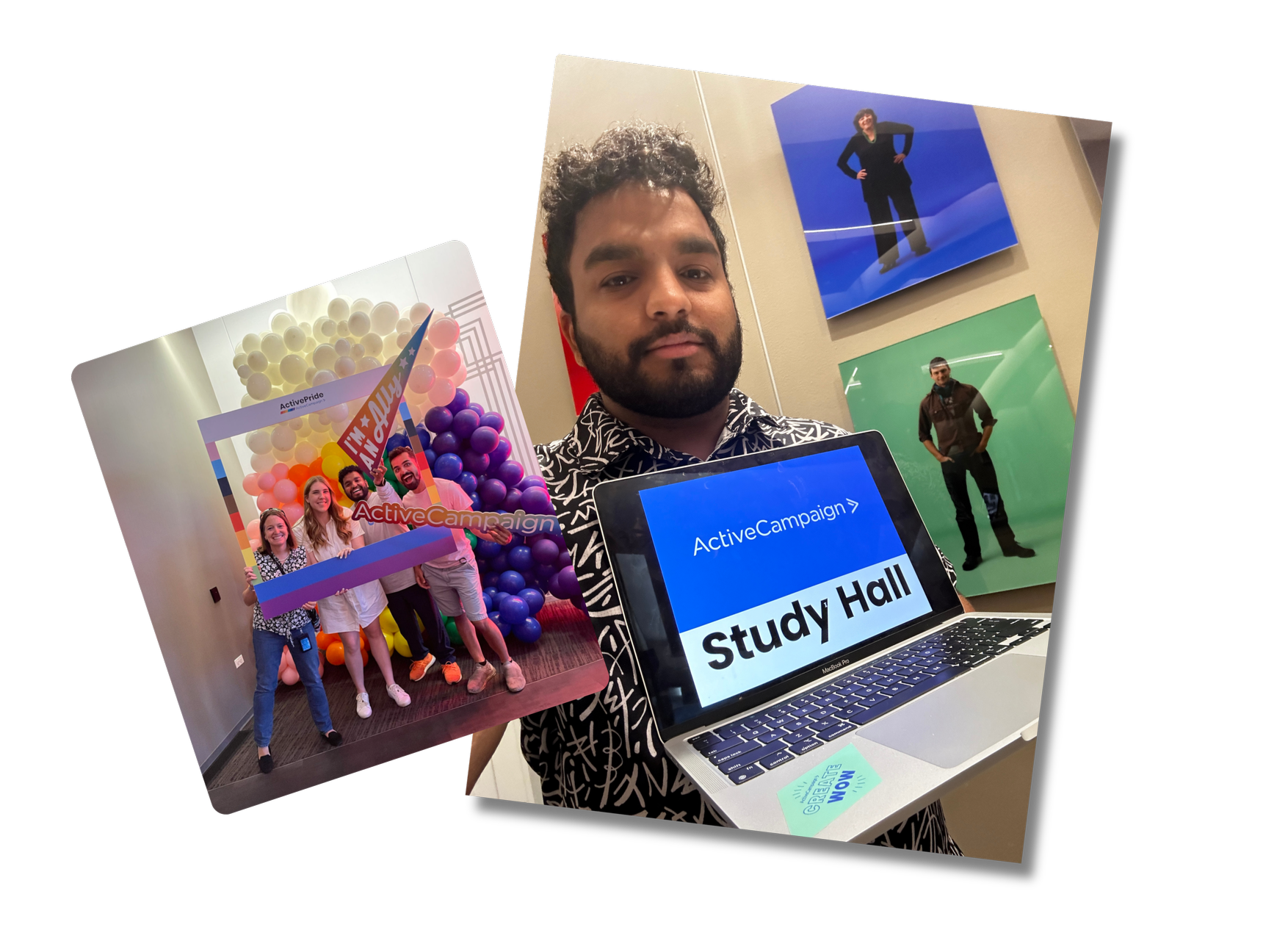
Behind the scenes at ActiveCampaign, from Study Hall production to building learning experiences with the team.
Think about the last product certification you took. Did you actually learn something, or were you clicking through things you already knew waiting for the certificate at the end?
That was something I thought about a lot at ActiveCampaign.
I worked across customer, partner, and employee education for a platform with a lot of depth. Different customers used different parts of the product, and the people interacting with it ranged from business leaders who needed the big picture to practitioners who needed to know exactly how things worked.
So before building more content, I wanted to answer a simpler question:
What does this person actually need to know to be successful?
Designing around the learner
One of the ways I approached this was by separating audiences by the depth of knowledge they actually needed.
Someone in finance or HR might only need to understand what a product or feature does and why it matters. A sales, support, or customer success leader needs more context around positioning, customer impact, and what their team should know.
A frontline seller, implementation specialist, support rep, or practitioner needs much more: FAQs, troubleshooting, collateral, workflows, examples, and enough hands-on knowledge to actually use or support the product.
How i approached the learning design in 4 steps.
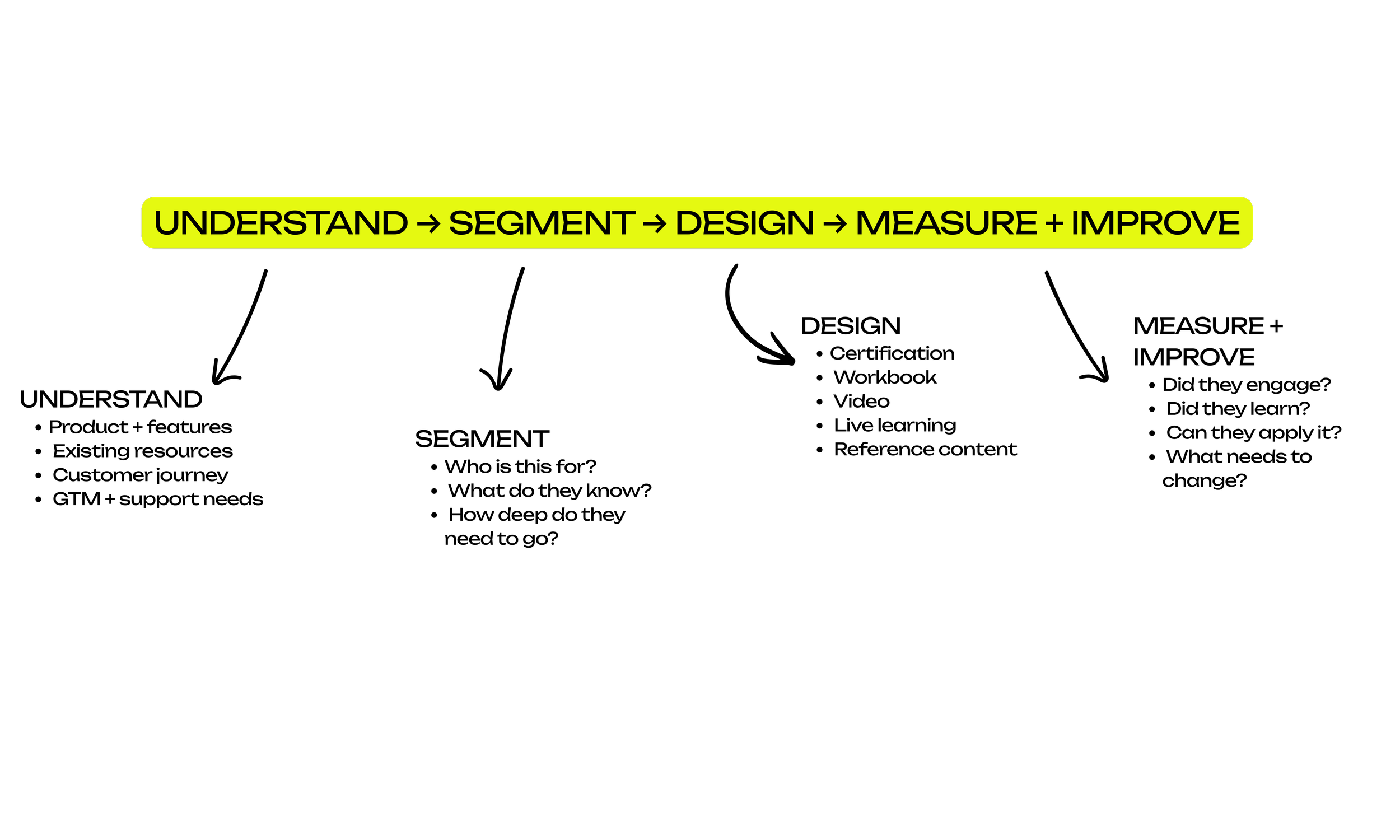
We applied that thinking externally too. A business owner evaluating ActiveCampaign doesn’t need the same education as someone building automations and managing lifecycle marketing in it every day.
The goal was to teach the right thing, at the right depth, to the right person.
Learning how to design learning
I graduated with a degree in biology. I didn’t go to school for instructional design.
As I got deeper into this work, I realized that being good at explaining something wasn’t enough. I wanted to understand the actual discipline behind how people learn.
So I approached it the same way I approach most things I don’t know how to do yet. I researched instructional design, dug into learning objectives and frameworks like Kirkpatrick, talked with people who knew the field better than I did, found mentors, and took a lot of coffee chats.
Then I started applying what I learned to the work in front of me.
That experience shaped something I still believe about my career: I don’t need to already know everything to take ownership of something. I need to know how to learn it.
Building partner education around a business problem
Our partner certification had a bigger job than giving someone a credential.
Partners were selling, implementing, recommending, and supporting ActiveCampaign. The better they understood the product, the more independently they could work with their own customers and the better equipped they were to recommend ActiveCampaign for the right use cases.
Could partners confidently get customers started? Could they answer common questions without immediately escalating them back to ActiveCampaign? Could they understand where the product was a strong fit and make better-informed referrals?
Those were the kinds of outcomes we wanted the education to support.
It also gave us a more scalable model. As the partner ecosystem grew, education could help partners sell and support the product without requiring ActiveCampaign’s internal teams to scale one-to-one support at the same rate.
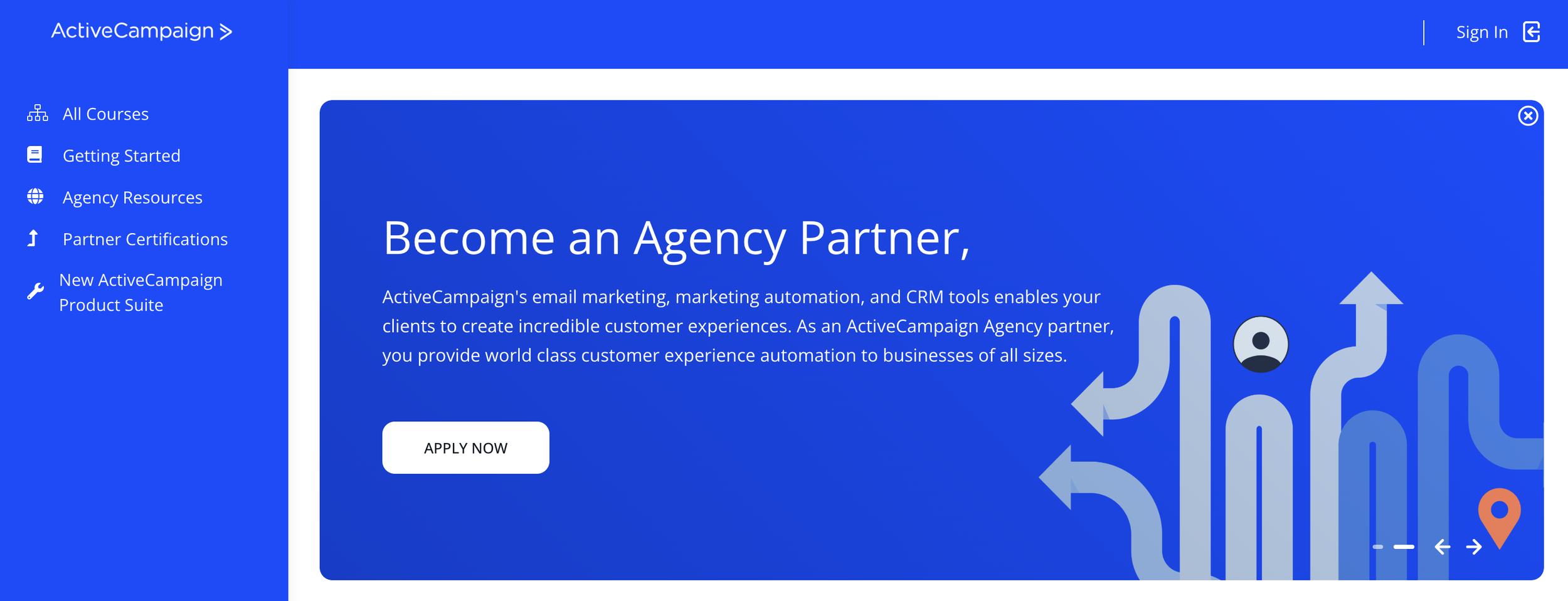
The partner learning experience brought certification, product education, and agency resources into one place.
Making certification worth someone’s time
Certification needed to sit somewhere between too easy to mean anything and unnecessarily difficult.
If someone already knew the material, could they demonstrate it without sitting through hours of content they didn’t need? If they didn’t know it, were we actually teaching them something useful? Did the assessment test what mattered?
That thinking shaped how I approached curriculum, assessments, interactive workbooks, study materials, live learning, and supporting resources.
We also thought about what happened after someone became certified. Could they actually use what they learned with a customer? Could partners sell and support the product more confidently? Could the credential itself become something they were proud to share?
Those questions mattered more to me than completion alone.
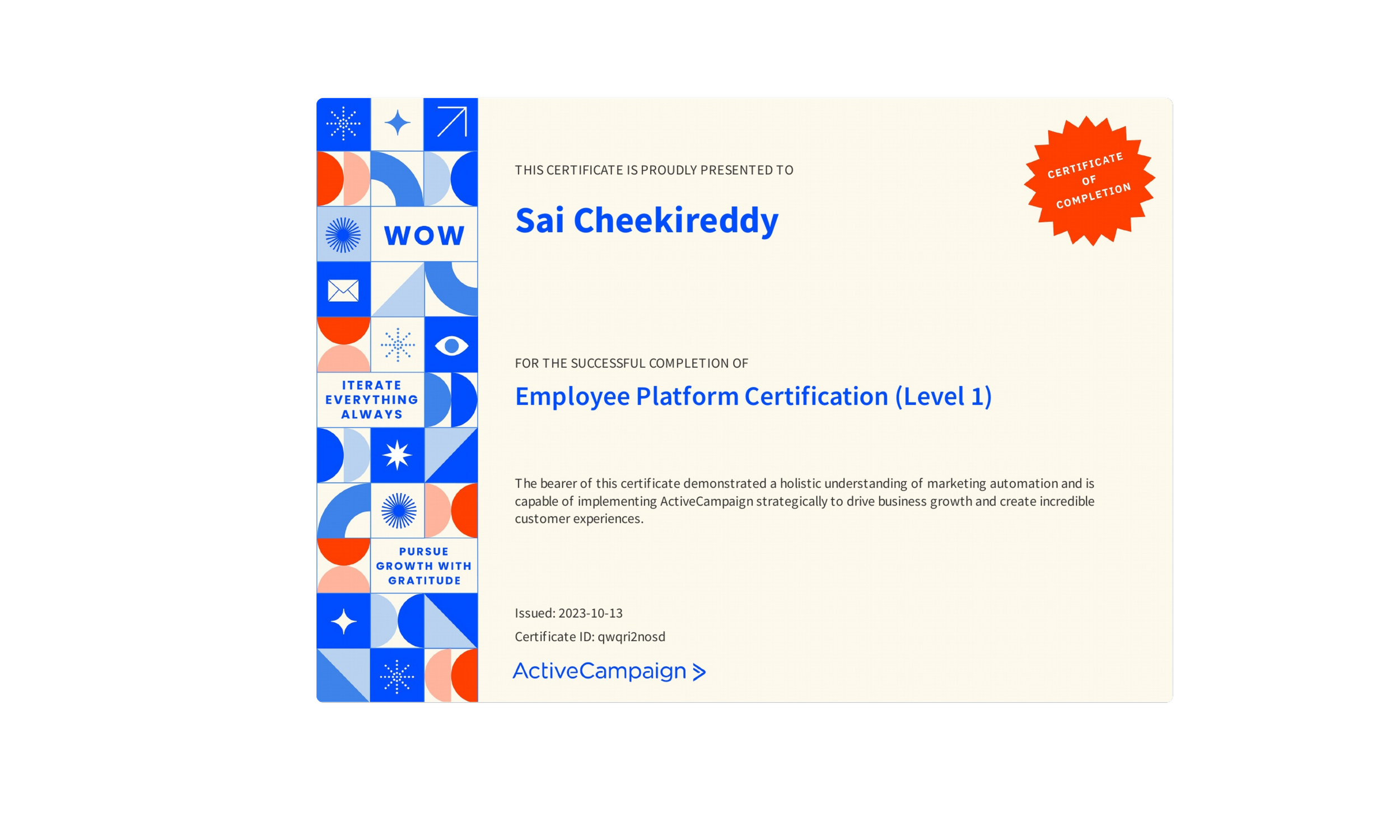
One of the certification experiences I helped build, designed around the level of product knowledge someone actually needed for their role.
Designing the whole learning experience
My role extended into how the education actually looked and felt.
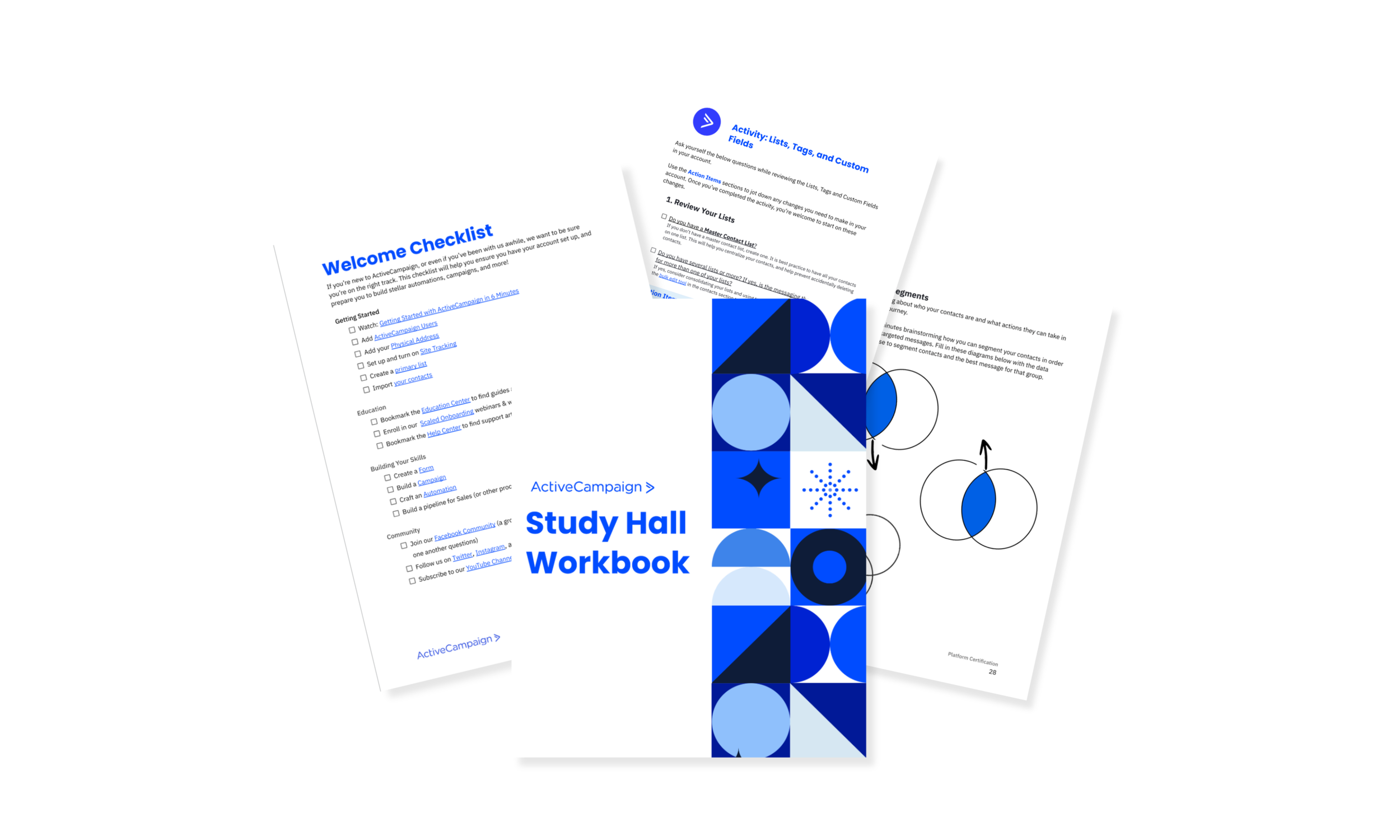
Study Hall workbook I designed to turn live product education into something learners could follow, use, and reference later.
I designed presentations, interactive PDF workbooks, exercises, and supporting materials while working within ActiveCampaign’s brand system and collaborating with creative partners.
For Study Hall, that extended into live education. I worked across presentations, workbooks, recording setups, cameras, lighting, and the technology needed to make the experience work in person and online.
I also supported educational video and YouTube production with the team.
I liked working across both sides of it: figuring out what someone needed to learn and then figuring out how to make that experience genuinely good.
Building something we could keep updating
Product education doesn’t stay finished for very long.
Features change. Messaging changes. A deck changes, which means a workbook, video, or certification question might need to change with it.
I used templates, reusable components, batch editing, and repeatable production workflows to make those updates easier. This was before generative AI became part of everyday content production, so a lot of the leverage came from building better systems and finding smart ways to automate repetitive work.
That gave us more time for the work that required judgment: what to teach, who needed it, and how deeply they needed to understand it.
What I owned
-
Designed education around what different audiences needed to understand and be able to do, using learning objectives and instructional design principles to guide the experience.
-
Built and supported certification experiences across curriculum, assessments, credentialing, and tiered learning based on role, product use, and required depth.
-
Created presentations, interactive PDF workbooks, exercises, and supporting resources while helping establish a consistent visual experience for education content.
-
Built templates, reusable components, batch-editing workflows, and repeatable processes that made educational content easier to create, maintain, and update.
-
Supported Study Halls, virtual learning, educational video, and YouTube production across both the learning experience and technical setup, including presentation technology, cameras, lighting, and recording.
What I took from ActiveCampaign
The question I still come back to is:
What does this person actually need to know to be successful?
Then I work backward from there.
Who are they? What are they trying to accomplish? What do they already know? Where are they getting stuck? What should they be able to do afterward? And what’s the simplest learning experience that can get them there?
ActiveCampaign is also where I learned that I really enjoy this kind of work. Taking a complicated product, learning it deeply, understanding the people using it, and turning all of that complexity into something people can actually use. That’s still how I approach customer education, product adoption, and enablement today.