Scaling ShipBob’s customer experience before AI
How curiosity about support tickets turned into a self-service growth system across sales, onboarding, support and product
I joined ShipBob in sales in 2017, when the company was still early in its growth.
I consistently hit quota, often finishing around 110–120%. Once my number and my team’s numbers were in a good place, I’d use some of the time left in the month to learn how other parts of the business worked.
There wasn’t a formal rotation program telling me what to learn next. I was curious, so I’d ask people if I could sit with them, learn what they did or help out.
One of those teams was support. They were swamped, so I asked their manager if I could jump into Intercom and help with tickets. Sometimes I’d spend several days doing support while technically still working in sales. After answering the same questions over and over, I started wondering:
Why does someone need to answer this every single time?
That question ended up changing the direction of my career at ShipBob.
Do the unscalable work first
Before automating anything, I wanted to understand what customers were actually going through.
I answered Intercom conversations, dug through support tickets, looked at which help articles people were using and studied customer behavior in Tableau and Chartio. I spent time with people across sales, support, operations and product to understand what they were seeing too.
Sometimes that meant getting much closer to the problem. When a customer had an issue receiving inventory at our Chicago-area warehouse, I once took an Uber there and helped receive it myself.
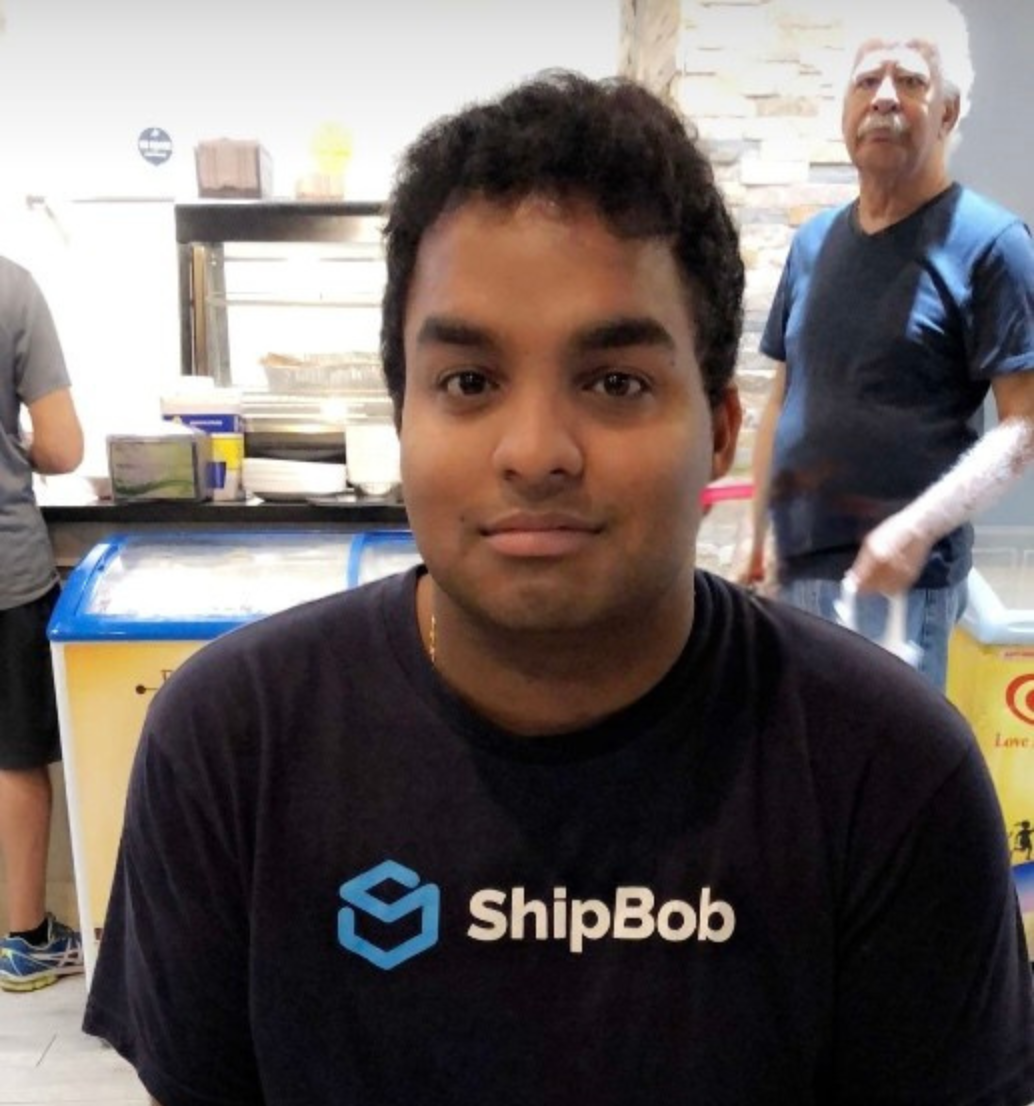
Early days at ShipBob, when I was still in sales and starting to learn the business beyond my own role.
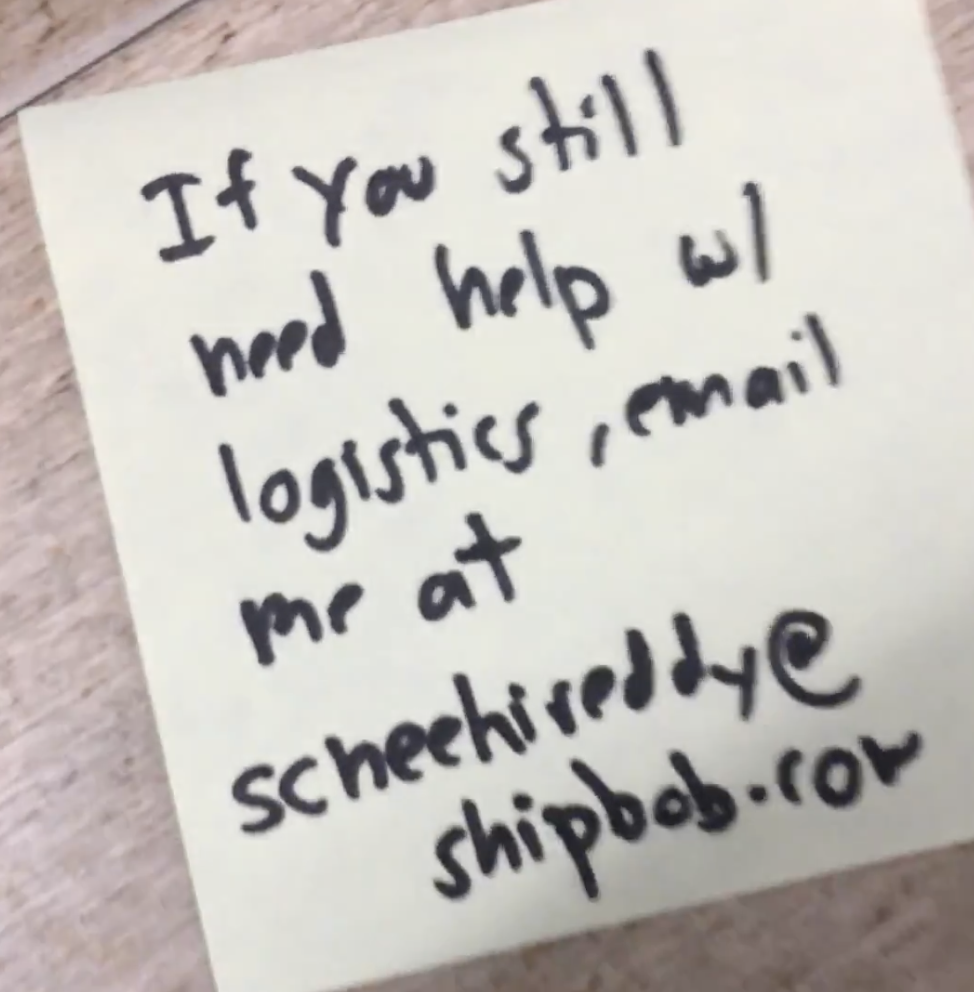
My version of early outbound. I’d walk into Chicago businesses with an online presence, introduce myself and leave a handwritten Post-it with my email. It was scrappy, but it actually generated more leads for me than some of my traditional online prospecting.
Was that scalable? Absolutely not. But I learned a lot more by seeing the problem firsthand.
You can’t automate a customer journey you don’t understand.
That became one of the biggest lessons I took from ShipBob. A lot of my career growth there came from simply finding someone who knew something I didn’t and asking, “Can you show me how this works?” Eventually, that curiosity took me from sales into onboarding, growth and much more product-adjacent work.
Figuring out what we could automate
As we learned where customers were getting stuck, we started asking a pretty simple question:
Does this actually need a person?
I worked across Pendo, Intercom, Drift, email, video and live education to build out the self-service experience.
We created onboarding flows, in-app guidance, lifecycle messaging, automated chat experiences, troubleshooting resources, tutorial videos, GIFs, visual explanations and live office hours.
The idea was pretty simple. Let technology handle the repetitive stuff so our teams had more time for the work where they were actually valuable.
A support rep could spend more time solving a complicated customer problem. An implementation specialist could focus on a complex launch. A salesperson could focus on a high-potential account.
And customers who just wanted to get started on their own could do exactly that.
The self-service growth flywheel
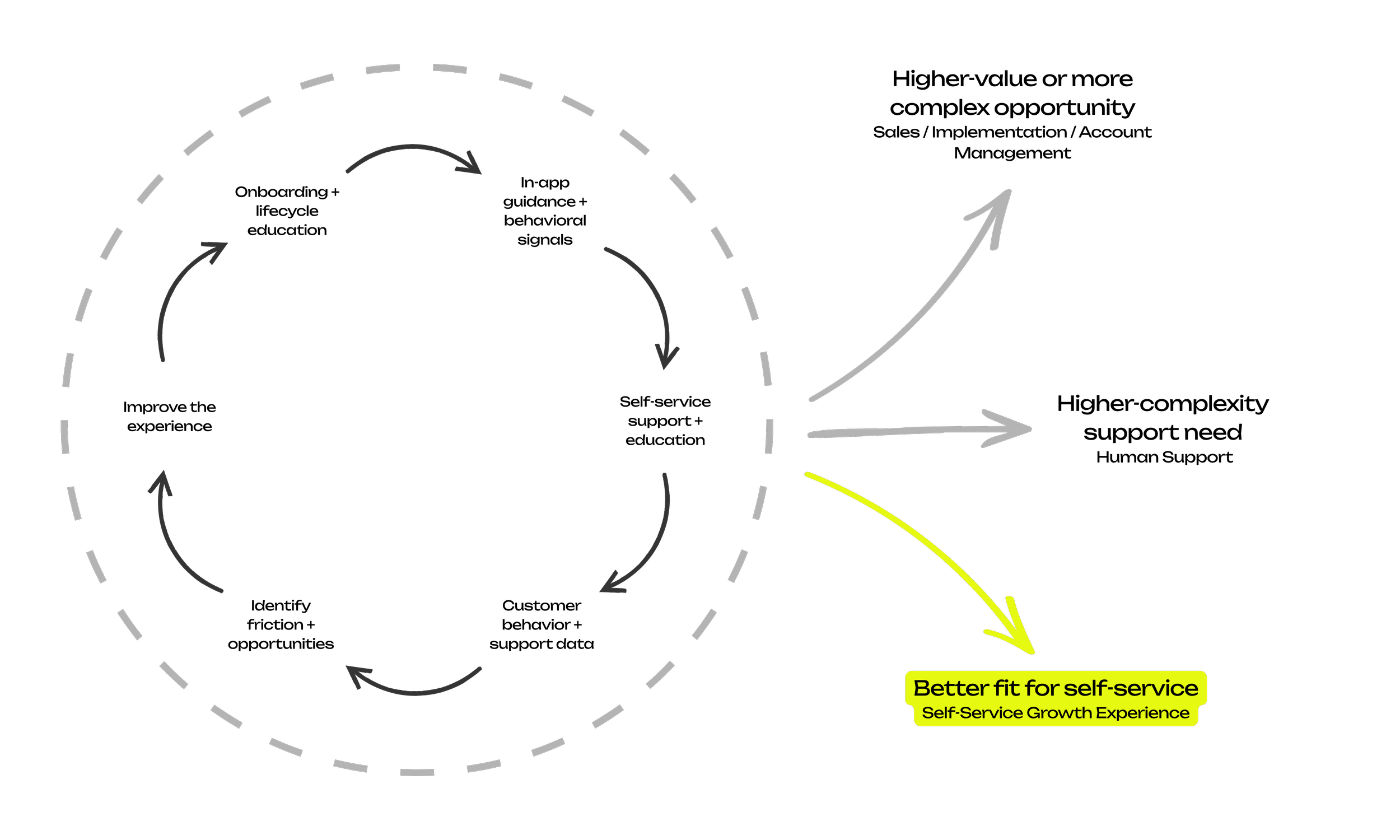
The goal was to keep learning from every part of the experience.
What were customers clicking? Where were they getting stuck? What questions kept coming up? Who could continue on their own? Who needed help? Who looked like a much bigger opportunity than we initially realized?
Those signals gave us a way to keep improving the experience while routing people toward the right kind of help.
Not everyone wanted to talk to sales
One of the assumptions we challenged was that every B2B customer wanted to speak with sales before getting started. Some people wanted to find us, connect their store, understand the pricing and go.
So we let them.
At the same time, someone who entered through self-service could turn out to be a much larger opportunity. We used signals from Pendo, Intercom, our reporting and actual customer conversations to recognize when it might make sense to offer that person more help from sales or implementation.
The reverse happened too.
Sometimes someone entered through sales and self-service ultimately made more sense for them. That transition needed to feel intentional. We explained what resources they had, what support was available, how office hours worked and what they were getting through the self-service experience.
The interesting problem became figuring out which experience made sense for which customer. That thinking connected onboarding, support, education and revenue in a way I hadn’t really thought about when I first joined the company.
Using support data to make the product better
All of this also gave us a ton of information about the product itself. Every support conversation, onboarding question, help article visit and in-app interaction gave us another signal about where customers were struggling.
I used Intercom, Pendo, Tableau and Chartio to organize and understand some of that behavior. I also helped manage our NPS program in Pendo and regularly shared what we were learning with Product.
Instead of stopping at, “How do we help this customer?”, we could ask: Why are customers having this problem in the first place?
Sometimes the answer was better education. Sometimes it was onboarding. Sometimes it was something Product could actually fix. Those patterns helped inform product conversations, backlog decisions and future improvements. That’s still one of my favorite parts of this kind of work. Support and education data can tell you a lot about what you should build next.
What I owned
-
Pendo experiences, onboarding flows, in-app guidance and contextual product education
-
Onboarding communication, behavioral messaging and customer journeys
-
Intercom and Drift automation, troubleshooting systems and knowledge resources
-
Tutorial videos, GIFs, visual explanations, live office hours and complex-topic simplification
-
Support conversations, NPS, Pendo behavior, Tableau, Chartio and qualitative customer feedback
-
Segmentation, customer routing, sales handoffs and identifying higher-value opportunities
-
Turning recurring customer friction and behavioral signals into insights for product teams
-
Training teammates, documenting repeatable processes and reporting performance, customer behavior and program learnings to leadership
Building something that didn’t depend on me
At first, I was doing a lot of this myself. I answered chats. I built automations. I created education. I recorded tutorials. I hosted office hours. I looked at the data. Eventually, other people needed to be able to run it too.
I helped train teammates, document what we were doing and hand off recurring responsibilities. One of those teammates actually came from ShipBob’s warehouse organization. He already understood the operational side of the customer experience incredibly well, and we could build on that.
My question slowly changed from “How do I solve this?” to “How do we build something that keeps solving this?” That’s a mindset I’ve carried into pretty much every role since.
Giving each team more room to focus
More customers could get through onboarding without every signup creating the same amount of work for sales, implementation and support.
At the same time, the signals we collected helped us recognize the customers and problems that deserved more attention.
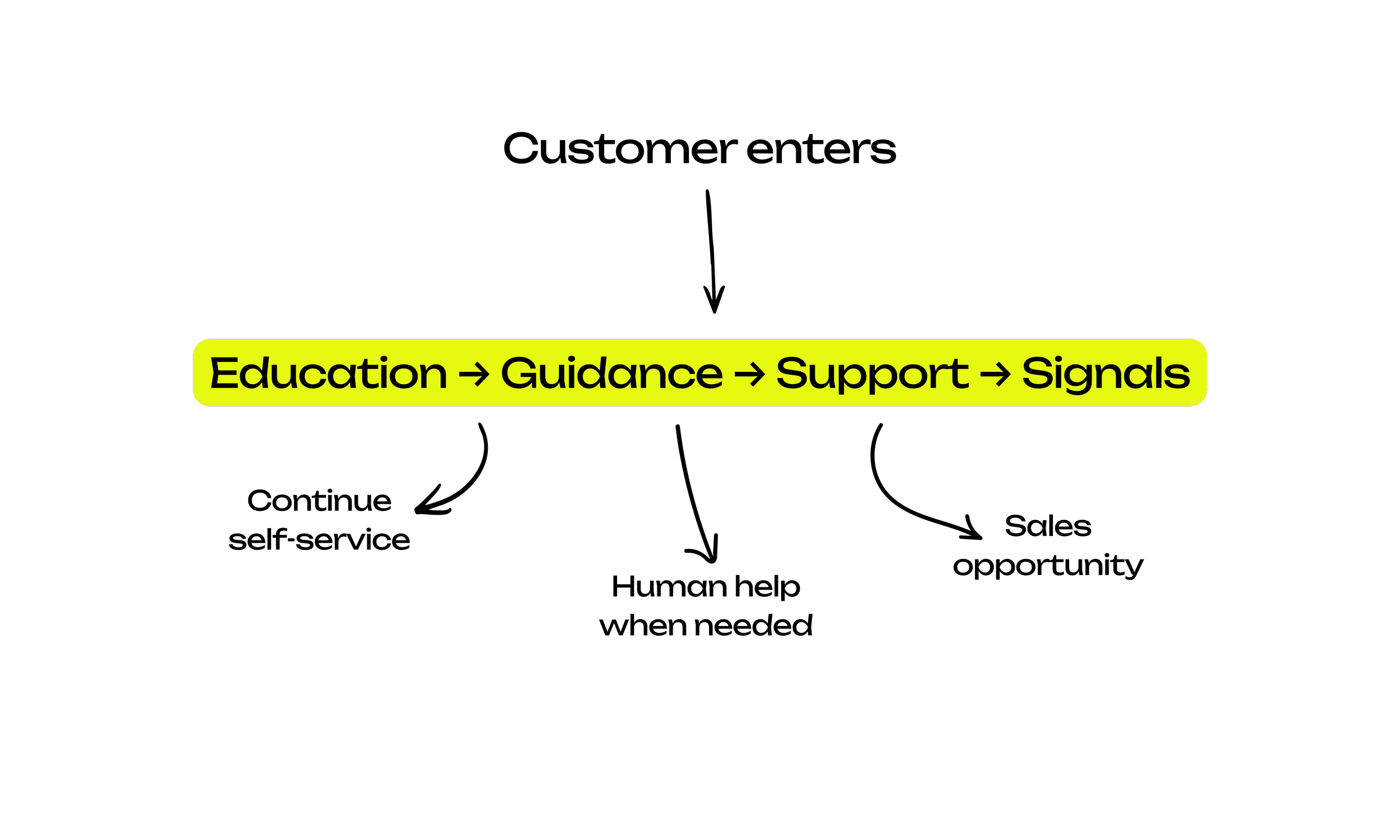
Automate the repeatable.
Surface the valuable.
Escalate the complex.
That’s probably the simplest way I can describe what we were building.
We were doing this before generative AI
A lot of this happened before the current wave of AI tools, which I’m actually pretty grateful for. It forced me to learn the work before trying to automate it. That’s still how I think about AI today.
If you’re using AI to write sales emails, you should probably know what makes a good sales email first. If you’re using it to analyze support tickets, you should understand the customer well enough to notice when its analysis is wrong. AI can make all of this dramatically faster now. But I still start with the same questions:
What is the customer trying to do? Where are they getting stuck? What can technology handle well? Where is an actual person more useful?
And increasingly:
What can we learn from all of this that should make the product better?
What ShipBob changed for me
I started at ShipBob in sales.
By the time I left, I’d worked across sales, support, customer onboarding, growth and product-adjacent customer experience. It taught me how connected all of those things really are. A support ticket can reveal a product problem. An onboarding issue can reveal a sales problem. A sales conversation can reveal an education problem. And a repetitive process can be a sign that there’s something better we could build.
That’s what eventually pulled me toward the work I do today across product adoption, customer education and self-service growth.
The best self-service experiences come from understanding the customer well enough to know where technology helps and where a person is more valuable.